Gas Stove vs Induction Cooktop: Which Is Better for Modern Homes?
Choosing the right cooking appliance is one of the most important decisions when designing a modern modular kitchen. With evolving cooking technologies, homeowners now have options like traditional gas stoves and high-efficiency induction cooktops. Both appliances come with unique advantages in terms of cooking speed, safety, energy efficiency, and convenience. Selecting the ideal option depends on your cooking habits, kitchen space, and overall lifestyle, making it essential to understand the pros and cons of each before outfitting your modern Indian kitchen.
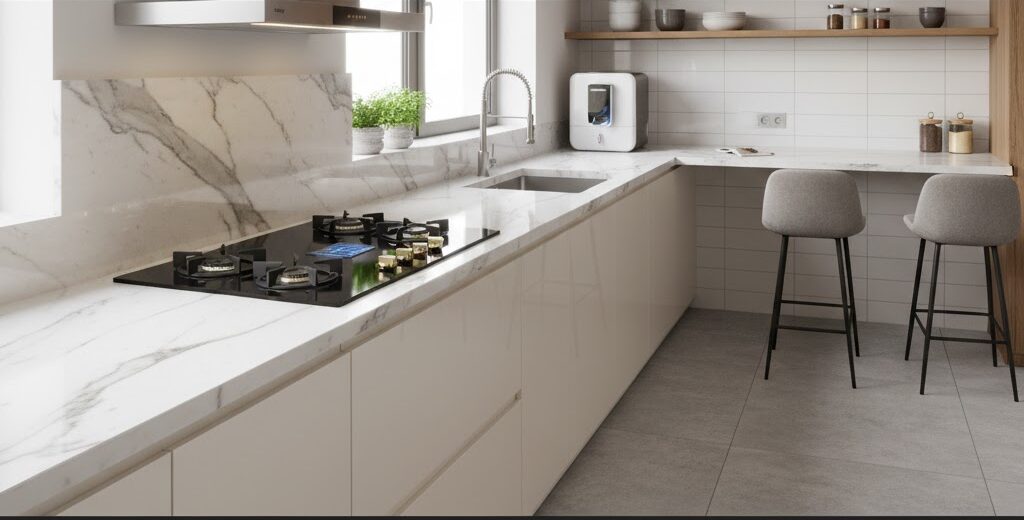
1. Cooking Speed and Efficiency
- Gas Stove: Offers instant heat and precise flame control, ideal for traditional Indian cooking. Works well with all types of cookware, including stainless steel, cast iron, and non-stick.
- Induction Cooktop: Uses electromagnetic energy to heat the pan directly, cooking food faster and consuming less energy. Requires induction-compatible cookware.
2. Safety Considerations
- Gas Stove: Flame-related risk exists, especially in households with children. Always ensure proper ventilation and a kitchen chimney to avoid smoke accumulation.
- Induction Cooktop: Safer for families, as there’s no open flame. Many models have auto-off features and heat sensors, reducing accident risk.
3. Energy Consumption
- Gas Stove: Uses LPG or natural gas. Energy efficiency depends on flame control and cooking habits.
- Induction Cooktop: Highly energy-efficient; up to 90% of energy is used for cooking, reducing electricity bills compared to traditional heating.
4. Maintenance and Cleaning
- Gas Stove: Regular cleaning of burners and 2, 3, or 4 burner gas stoves is required. Spills can accumulate around the hob.
- Induction Cooktop: Smooth glass surface is easy to wipe clean. No grease buildup as with gas stoves.
5. Compatibility with Modular Kitchen Designs
- Gas Stove: Fits traditional and modern modular kitchen designs, pairs well with kitchen chimneys, and complements modern furniture aesthetics.
- Induction Cooktop: Sleek, space-saving, and integrates seamlessly into a modular kitchen countertop, enhancing a minimalist, contemporary look.
6. Cost Considerations
- Gas Stove: Generally more affordable initially. Long-term cost depends on gas consumption.
- Induction Cooktop: Slightly higher upfront cost, but energy efficiency can offset electricity bills over time.
Conclusion
Both gas stoves and induction cooktops have their advantages. For traditional cooking, quick flame adjustments, and compatibility with all cookware, a 2, 3, or 4 burner gas stove is ideal. For safety, speed, and energy efficiency, an induction cooktop may be better for modern homes.
Many modern Indian households opt for a hybrid setup — using a gas stove for daily cooking and an induction cooktop for fast tasks. Pairing these appliances with a kitchen chimney, hob, RO water purifier, and stylish modern furniture ensures a fully functional, elegant modular kitchen.